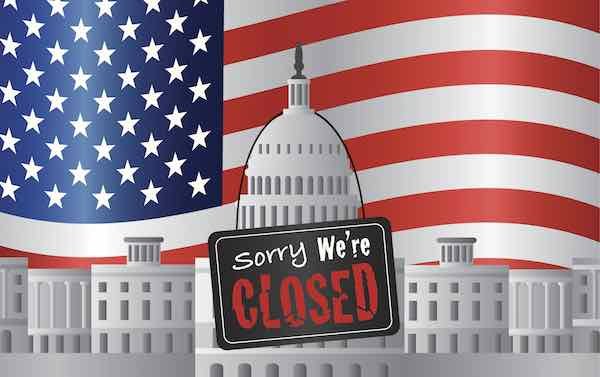
The federal government shutdown is now entering its fourth week. The longer it goes on, a new question being asked in Washington and across the nation is: will it last until Thanksgiving?
The standoff has already outlasted any predictions for a quick resolution. There are growing signs to suggest it could extend well into November unless one side decides to yield.
The weeks ahead include several key pressure points that may determine whether the shutdown ends soon—or deepens into the longest shutdown in modern history.
Upcoming Key Dates Impacting the Government Shutdown
October 24: Federal Workers Miss Their First Full Paycheck
This coming Friday, at least hundreds of thousands of federal civilian employees are set to miss their first full paycheck.
Federal unions and employee organizations warn that missed income will ripple through local economies, especially those communities that are located near large federal installations. Community banks and credit unions are preparing for loan forbearance requests.
Historically, the first missed paycheck marks a turning point in public opinion. When paychecks stop, congressional offices typically see a surge of calls from federal employees and constituents—a pattern that has repeated in past shutdowns. Whether those calls push leaders toward compromise remains uncertain.
October 31: Military Pay Uncertainty
A week later, October 31 brings a new and politically potent risk: uncertainty over the next paycheck for more than one million active-duty service members.
Although temporary measures have kept pay flowing for military members so far, Pentagon officials warn that continued delay could affect reserve and civilian defense personnel. Military families are already expressing frustration online and through advocacy groups, noting that while they continue working, budget fights in Washington threaten their financial stability.
Few events have historically shifted political momentum faster than interrupted military pay. Lawmakers of both parties privately acknowledge that Halloween weekend could become a turning point if the situation is not resolved.
November 1: Affordable Care Act Open Enrollment
Just one day later, November 1 marks the start of open enrollment under the Affordable Care Act. The shutdown has already limited staffing at key agencies responsible for outreach and system maintenance. Extended disruptions could frustrate millions of Americans attempting to renew or adjust coverage.
For Democrats, a messy start to open enrollment would undermine one of their signature achievements. For Republicans, the optics of delaying access to health insurance could carry political risk of its own. That mutual vulnerability could force both sides back to the table—but only if the effects are highly visible.
Political Pressure Building—But Neither Side Is Blinking
Pressure is growing simultaneously on the White House and congressional Republicans.
House Republicans argue that the shutdown is necessary to secure fiscal reforms, including tighter spending limits and rollbacks of certain healthcare subsidies. Democratic leaders, meanwhile, insist that reopening the government must come later, without conditions tied to long-term policy changes that they want to negotiate before the government reopens.
For now, both sides believe they are holding the stronger hand.
Public opinion appears slightly more favorable to Democrats: several polls show roughly six in ten Americans place greater blame on Republicans and the Trump administration. But Democrats also face criticism for refusing to negotiate broader budget terms. The mixed polling gives each party just enough cover to continue the standoff.
Here is a rough estimate of how the shutdown will proceed and possibly end. This is not a scientific model. It is based on probability estimates, historical precedent, current political indicators, and timing factors that influence how long shutdowns typically last and also on the personal experience of the author who has been impacted by and observed government shutdowns as a federal employee, a government contractor, being the spouse of a senior government employee going without pay during a shutdown, and several decades of writing experience commenting on federal issues.
Three Scenarios
1. Early Breakthrough — 30% Chance
In this scenario, a political deal emerges soon after October 24 or 31 as missed paychecks and military concerns dominate headlines. Lawmakers agree to a short-term continuing resolution through early 2026.
Winners: Federal employees and political moderates in both parties.
Losers: Hardliners in both parties who sought to use the shutdown as leverage.
Watch what happens with Air traffic controllers—more than 10,000 of whom are currently working without pay. During the 2019 shutdown, a wave of unscheduled absences among this group forced cascading flight delays and helped bring that standoff to an end.
2. Standoff Into Thanksgiving — 50% Chance
Both parties remain entrenched. Public frustration grows, but blame remains divided. Essential services remain strained while temporary fixes for military and safety operations blunt full impact.
Winners: No clear winner; Democrats hold a slight edge in public opinion.
Losers: Federal families, contractors, and small businesses tied to federal spending.
3. Extended Impasse — 20% Chance
The shutdown stretches into December, echoing the 2018–19 record closure. Mounting operational failures and potential economic fallout eventually force a larger bipartisan compromise.
Winners: None.
Losers: Virtually everyone—from taxpayers to federal agencies struggling to recover lost productivity.
Thanksgiving as a Political Deadline
If the shutdown persists into mid-November, the symbolic weight of Thanksgiving will grow. By then, hundreds of thousands of households will have missed multiple paychecks, and political patience will be thin.
Both parties are aware of the optics: millions of federal employees spending the holidays without income would dominate national headlines. Yet for now, neither side wants to appear to retreat first.
Bottom Line
The next ten days—centered around October 24 and October 31—will determine whether this shutdown ends quickly or extends into America’s holiday season.
If leaders remain unwilling to compromise by early November, a shutdown lasting until Thanksgiving—or beyond—is possible and even likely to occur.
Starting November 1, many Americans registering for new health care plans will see higher projected premiums for 2026. Democrats have said this date is the effective deadline for congressional action on the expiring Obamacare enhanced premium tax credits, but Democratic leaders also think missing that deadline will increase pressure on Republicans.
“It’s still not possible to stop the full impact of the rate increases after November 1,” according to Senator Chris Murphy (D-CT). “If we don’t deal with this before November 1, it becomes trickier to solve legislatively, but the heat gets turned way up by the public to do something.”
This is a big gamble for Democrats. Republican Senate Leader John Thune (R-SD) and Senate Republican leaders are continuing to force vote after vote on the House-passed Continuing Resolution that funds the government until November 21 — and now, a Thursday procedural vote on full-year Defense funding.
For federal employees, military families, and contractors across the country, that uncertainty now defines daily life as Washington’s political battle shows no sign of thawing.
© 2025 Ralph R. Smith. All rights reserved. This article
may not be reproduced without express written consent from Ralph R. Smith.