
This is the latest in a series of posts explaining the decisions we make at Dribbble that affect our users, as well as the results of those decisions (positive or negative).
It’s been one year since users began transacting on Dribbble. The functionality we introduced last September – which enabled clients to request design services and pay, and designers to deliver work and get paid – was modest but marked the beginning of Dribbble’s reinvention from an advertising-supported social network to a revenue-sharing marketplace.
At that point, Dribbble had already been an institution in the design world for fifteen years, and a business model transformation wasn’t the obvious next step for the company. Maintaining the status quo would have been lower risk – at least in the near term – but it was our responsibility to ensure Dribbble could continue fulfilling its mission in perpetuity.
That mission – to help professional designers earn a living doing work they take pride in – is best served by a business model that incentivizes Dribbble to deliver high-intent, qualified leads to designers. The more designers earn from the clients we bring them, the more resources we have (including engineering, marketing, moderation, and customer support) to improve the platform further and help designers earn more.
This highly transactional interpretation of our mission – which itself has undergone many iterations over the years – takes Dribbble even further from its origins as “show and tell for designers,” but it also plays to our strengths, treats all stakeholders fairly, and positions us for long-term, sustainable growth.
Today, Dribbble exists to help designers generate and convert leads, and the purpose of everything we do – every feature, campaign, and policy – is ultimately to increase lead flow to designers.
So far, it’s working.
Over the past year, designers on Dribbble have received hundreds of thousands of leads – including from some of the biggest companies in the world, such as Amazon, Salesforce, Netflix, Meta, Unilever, and Shopify – and millions of dollars in payouts. Transaction activity has increased every month with no signs of slowing, new users are joining in record numbers, and the future of the business is brighter than ever.
In August, GMV increased 46% M/M – the third consecutive month that M/M growth has accelerated – and many of our lower-funnel metrics also showed double-digit M/M growth and reached new high-water marks, including Orders, Clients, and Designers.
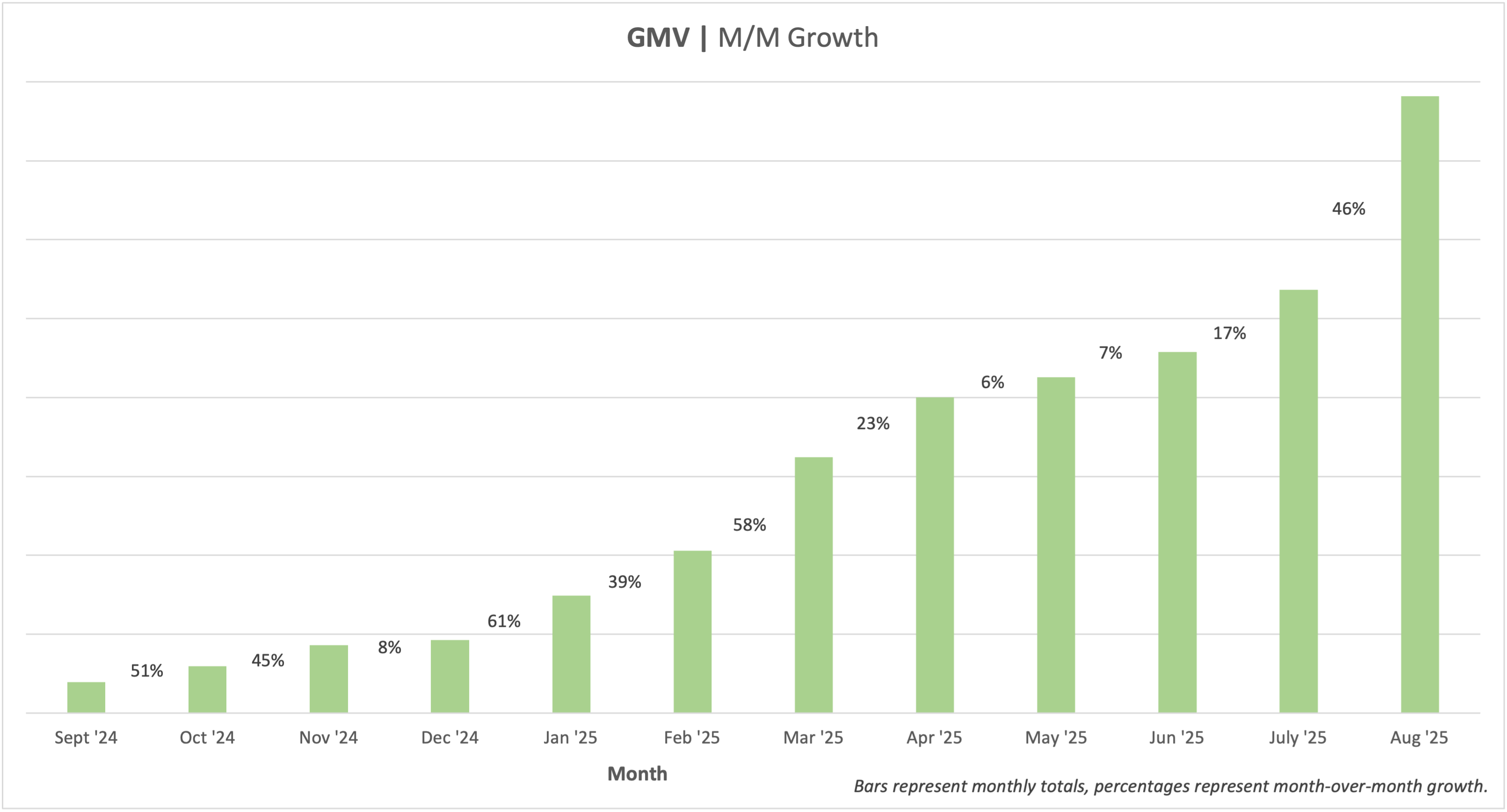
GMV – the total value of services sold through the platform – increased 46% M/M in August.
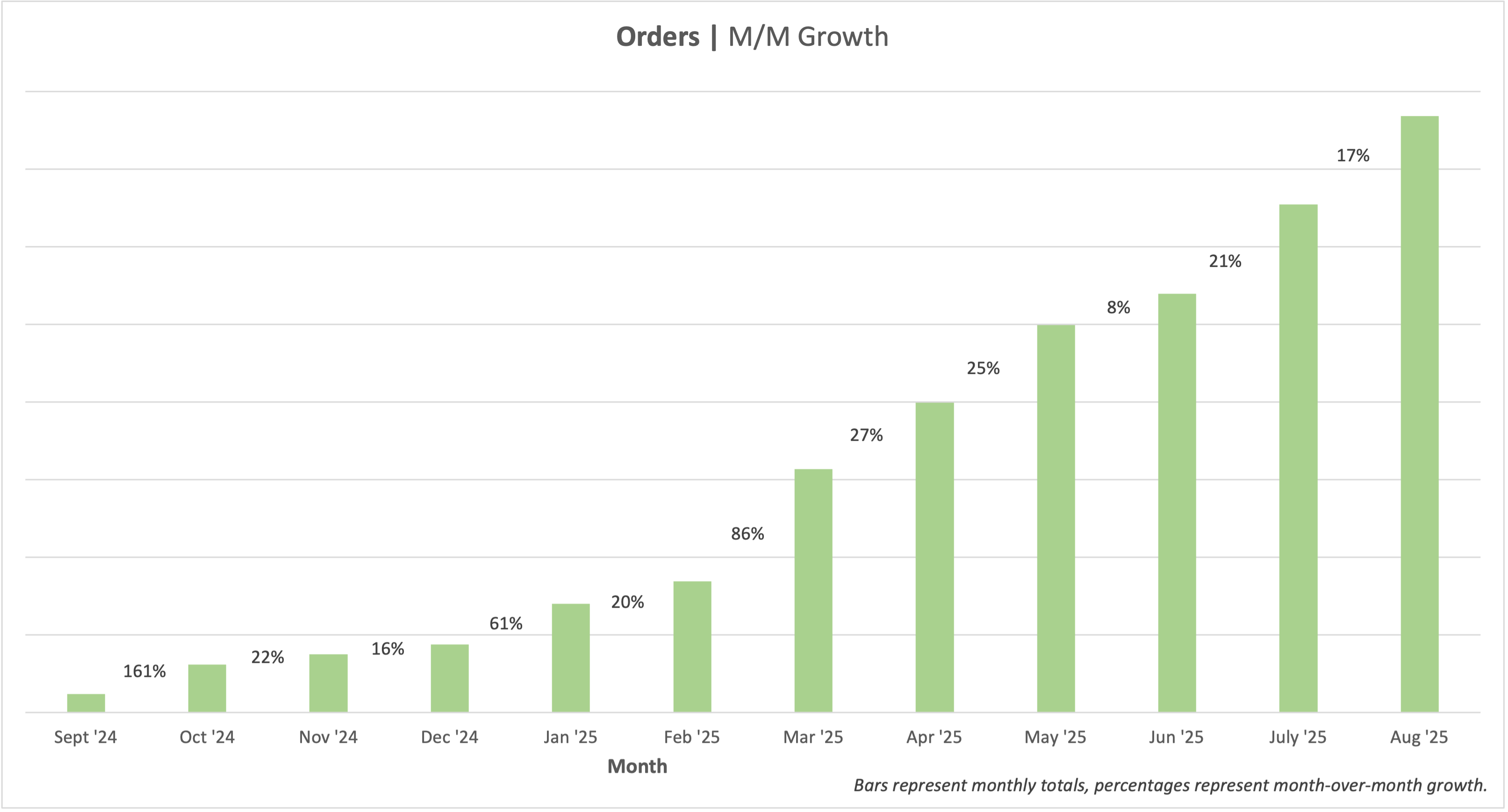
Orders – the total number of funded milestones – increased 17% M/M in August.
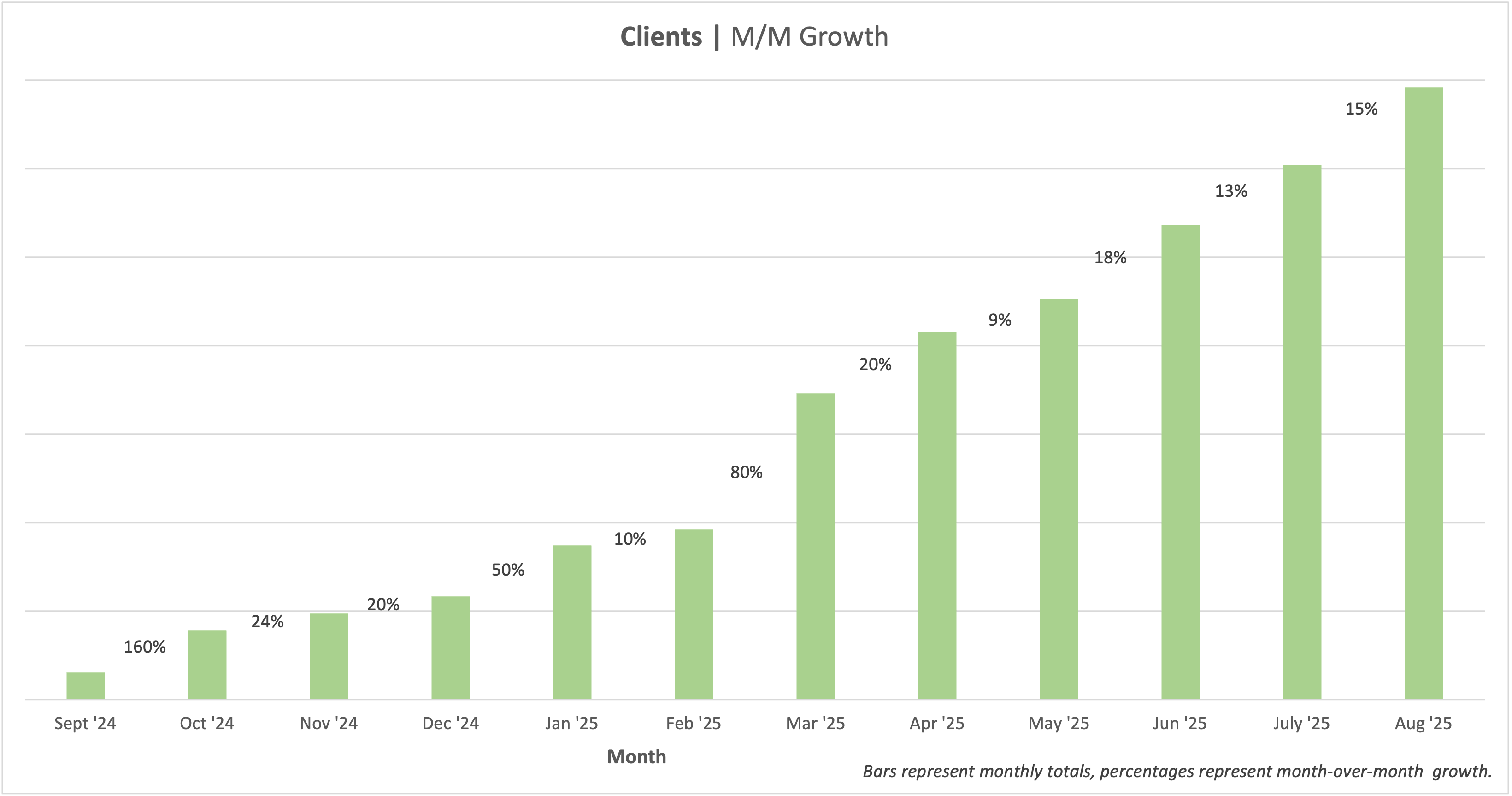
Clients – the total number of distinct users who paid for services – increased by 15% M/M in August.
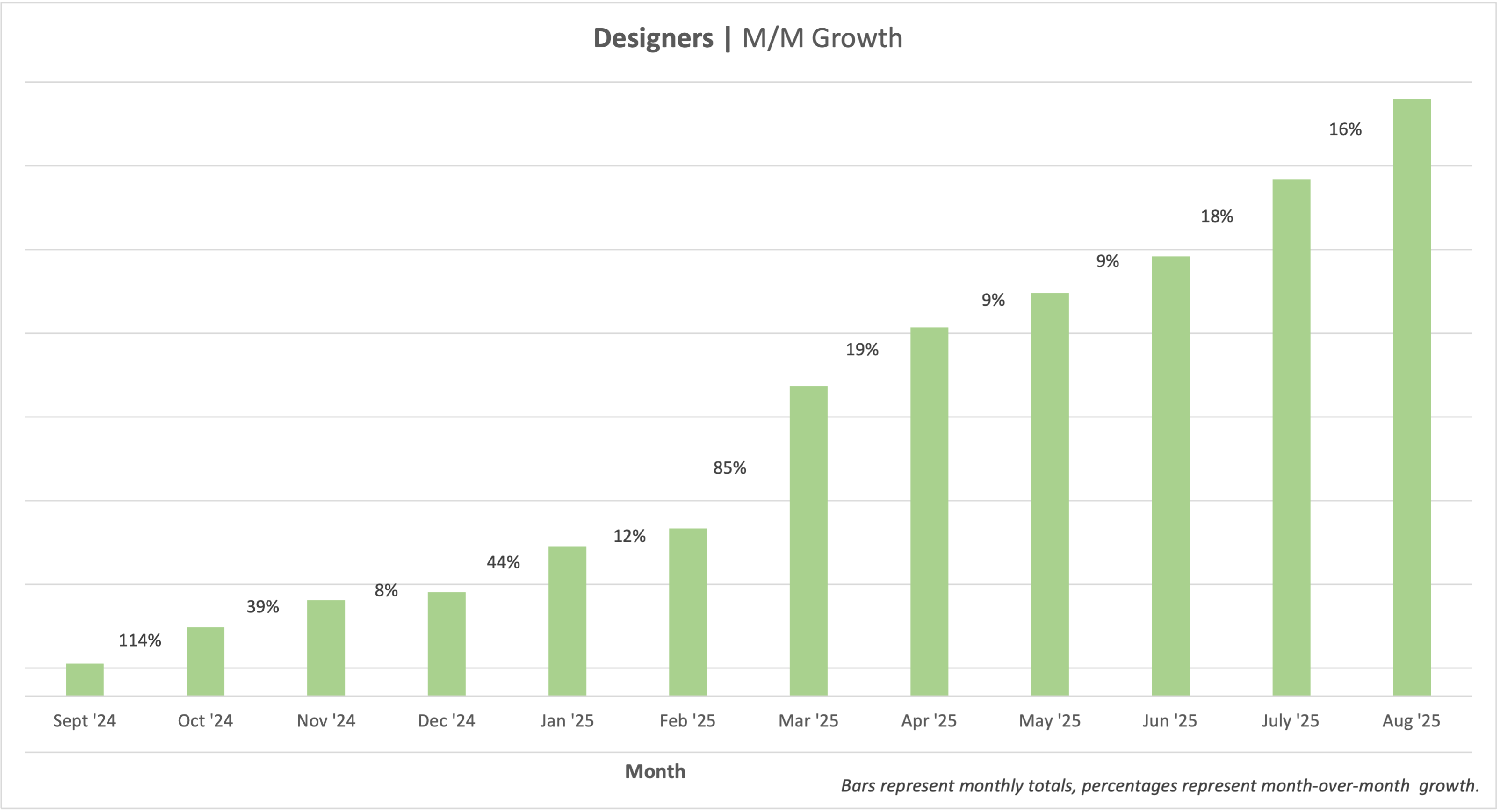
Designers – the total number of distinct users that were paid for services – increased 16% M/M in August.
While each month has surpassed the last, growth accelerated in July and August – a time of year that’s typically slower for businesses like ours. The past eight weeks, in particular, have been on fire thanks to new features – including Write With AI and Recommendations – that have made it significantly easier for prospective clients to find and contact relevant designers, as indicated by the metrics below:
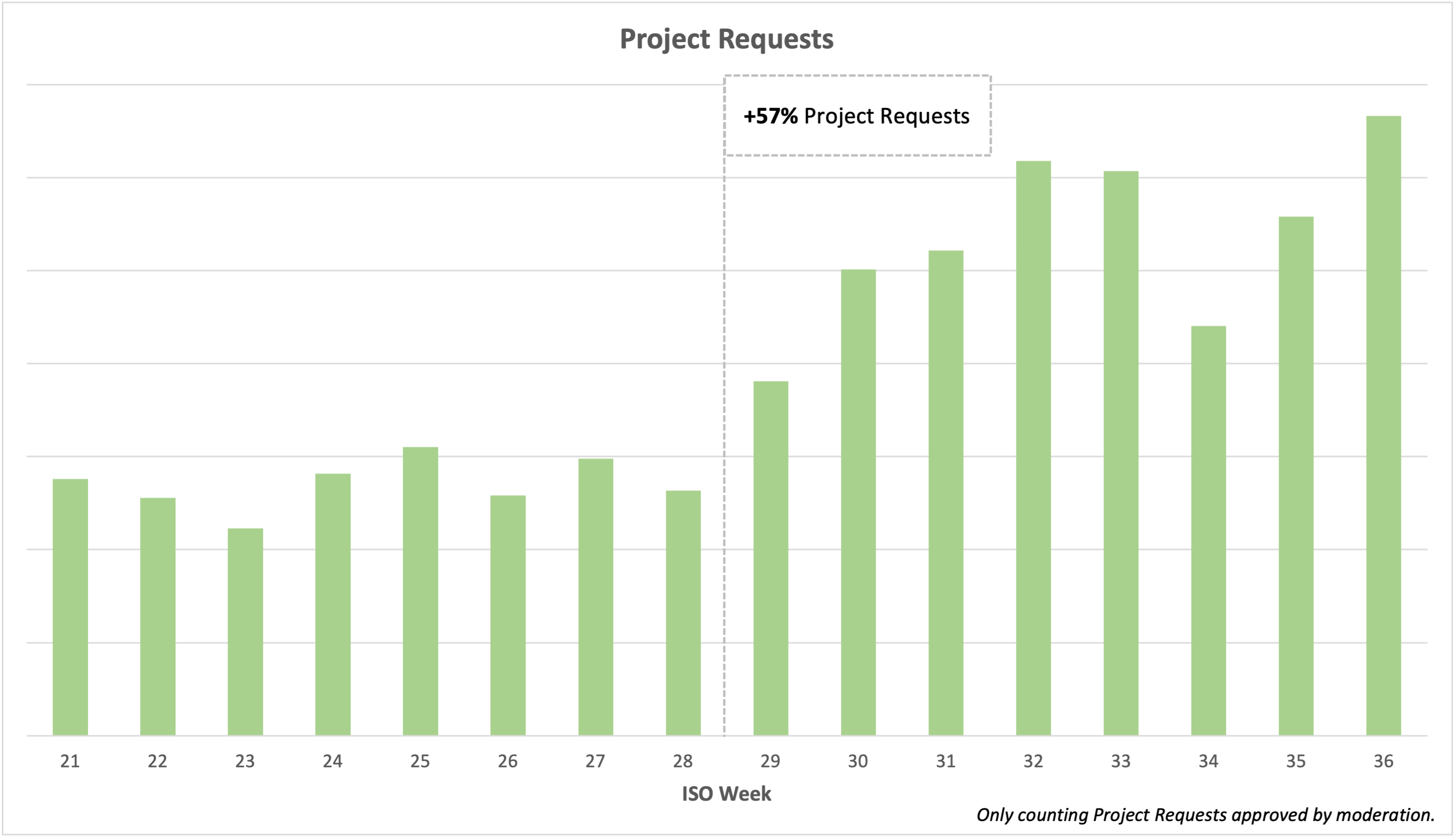
Project Requests are work inquiries received by designers. This graph compares the past eight weeks to the preceding eight-week period.
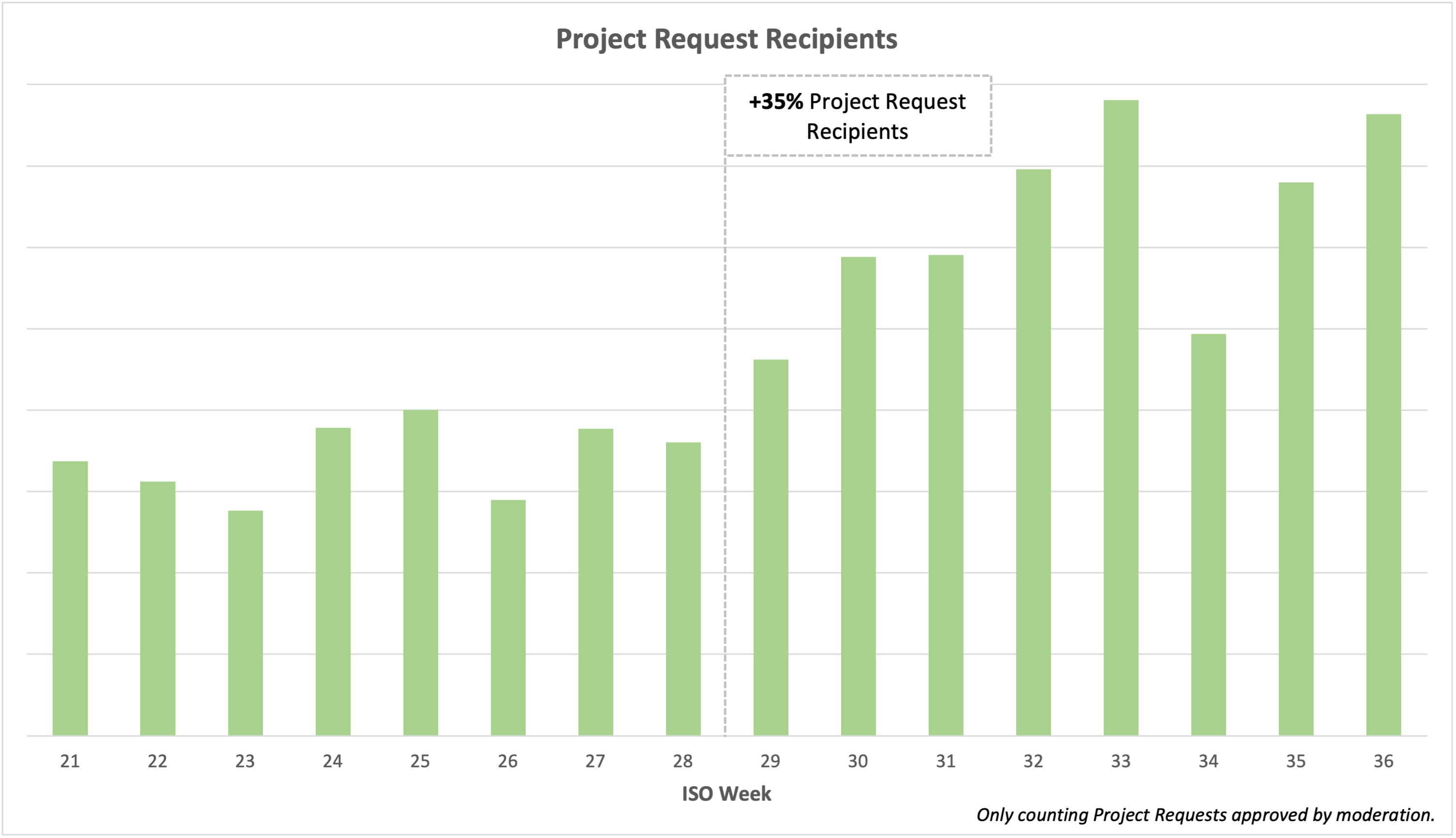
Project Requests Recipients are the distinct designers who received work inquiries from prospective clients. This graph compares the past eight weeks to the preceding eight-week period.
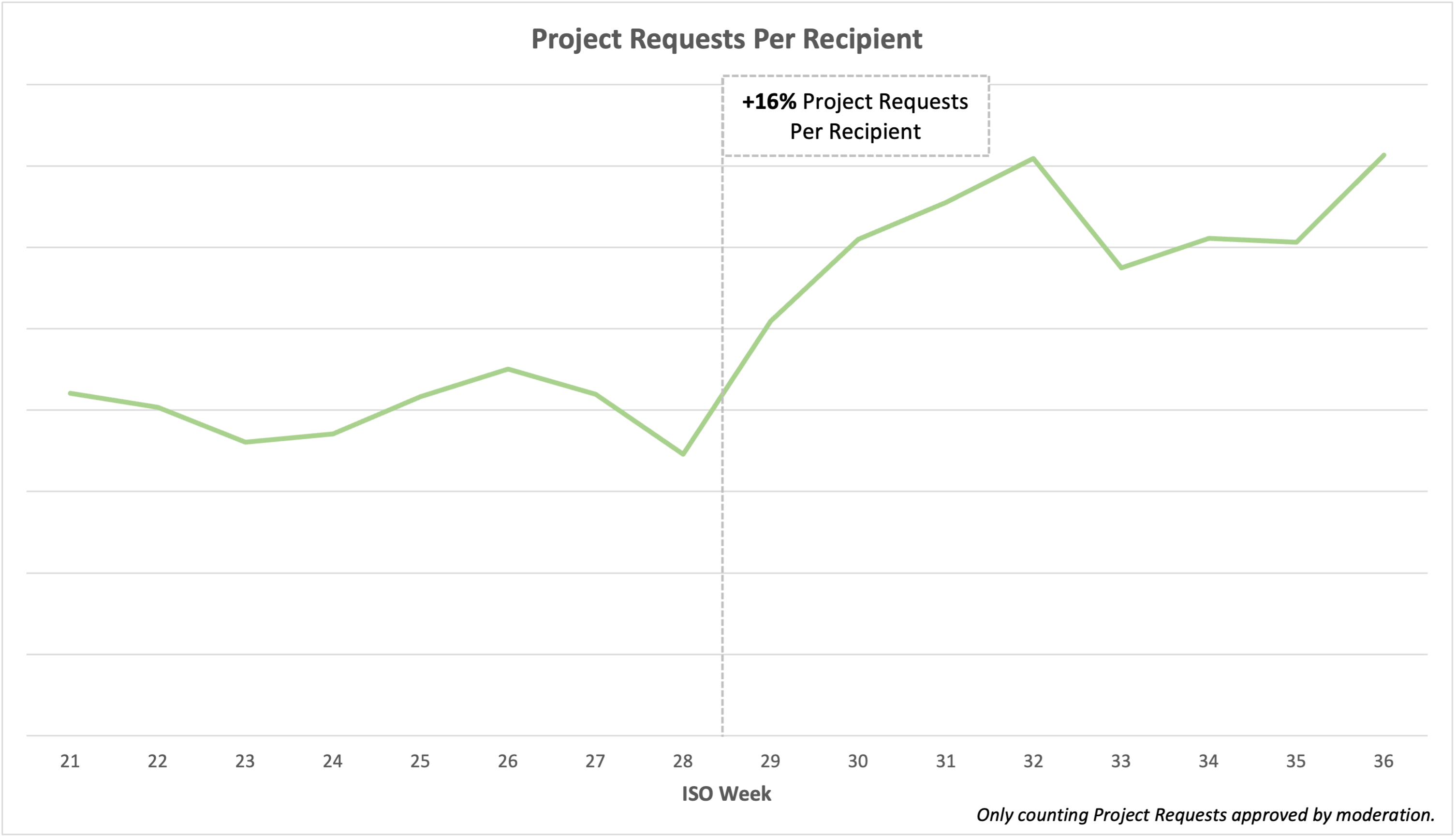
Project Requests Per Recipient represent the average number of work inquires received by each designer who received at least one request. This graph compares the past eight weeks to the preceding eight-week period.
Project Requests, Project Request Recipients, and Project Requests Per Recipient – which reflect the demand in our marketplace, as well as its distribution and density – are the leading indicators most predictive of our long-term success. Designers will share their work, advertise their services, and transact through the platform only if they expect to land more clients as a result. Conversely, nothing will keep them on the platform if they don’t see a return on their time and effort.
Not only have more designers received more Project Requests, but more clients have received – and accepted – more Proposals. For context, when a client sends a request to three or more designers, they’re virtually guaranteed to receive a reply from at least one. Recommendations has raised the average number of designers contacted per client above that threshold, leading to far more clients receiving responses – and, ultimately, proposals – from designers interested in their projects.
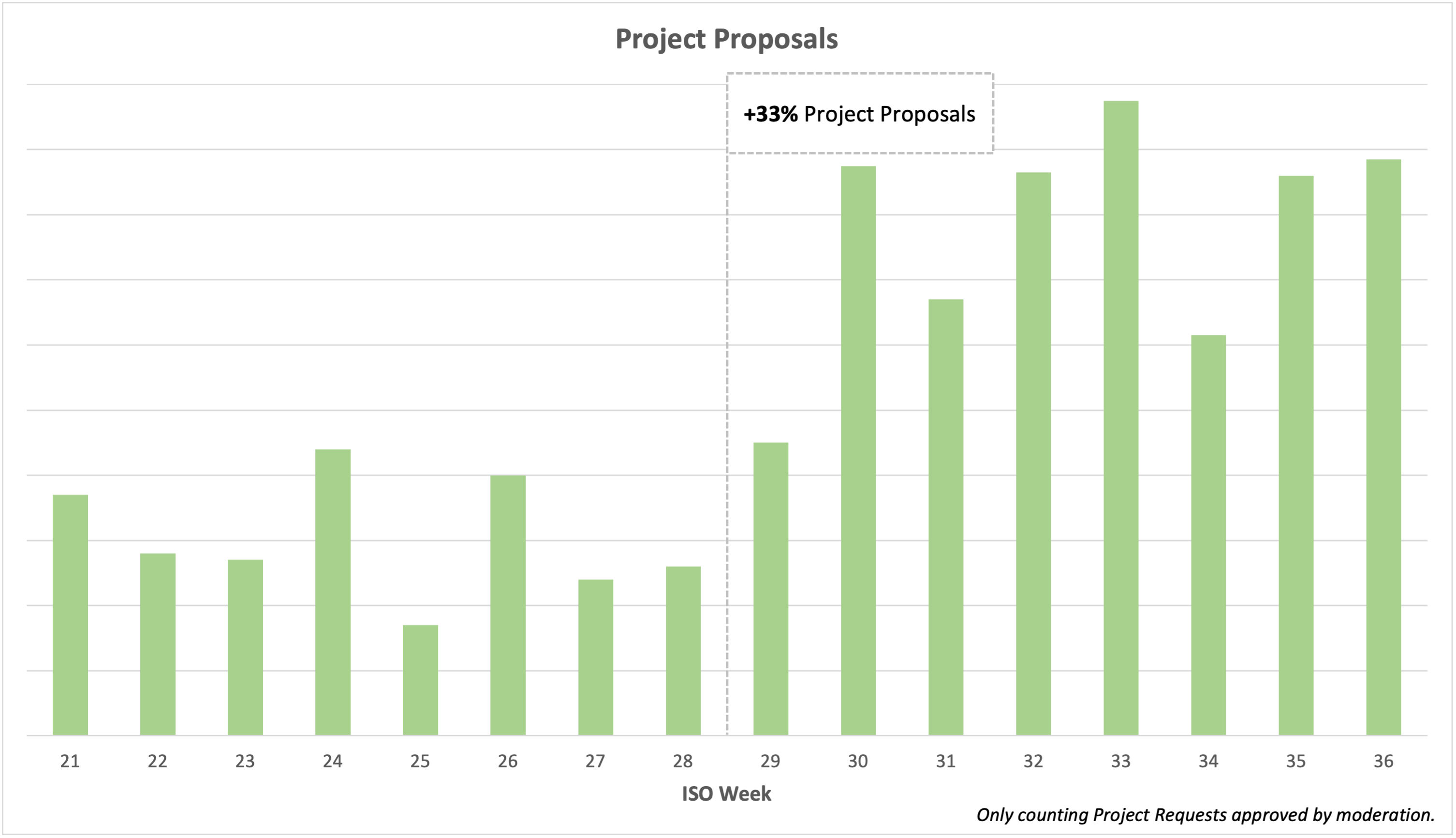
Project Proposals are sent by designers in response to client inquiries, detailing the scope of work and cost. This graph compares the past eight weeks to the preceding eight-week period.
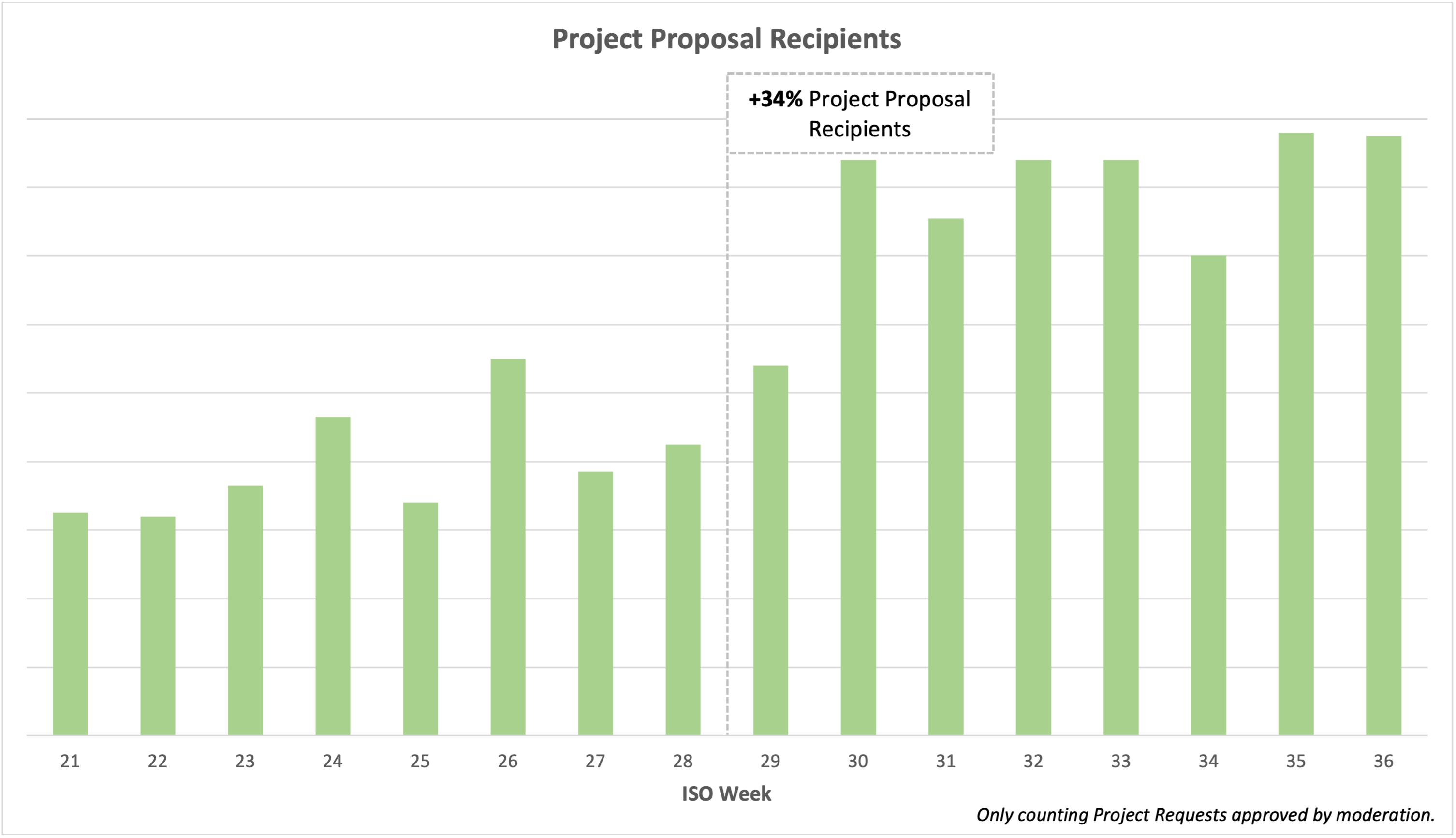
Project Proposal Recipients are distinct clients who have received a Proposal in response to their request. This graph compares the past eight weeks to the preceding eight-week period.
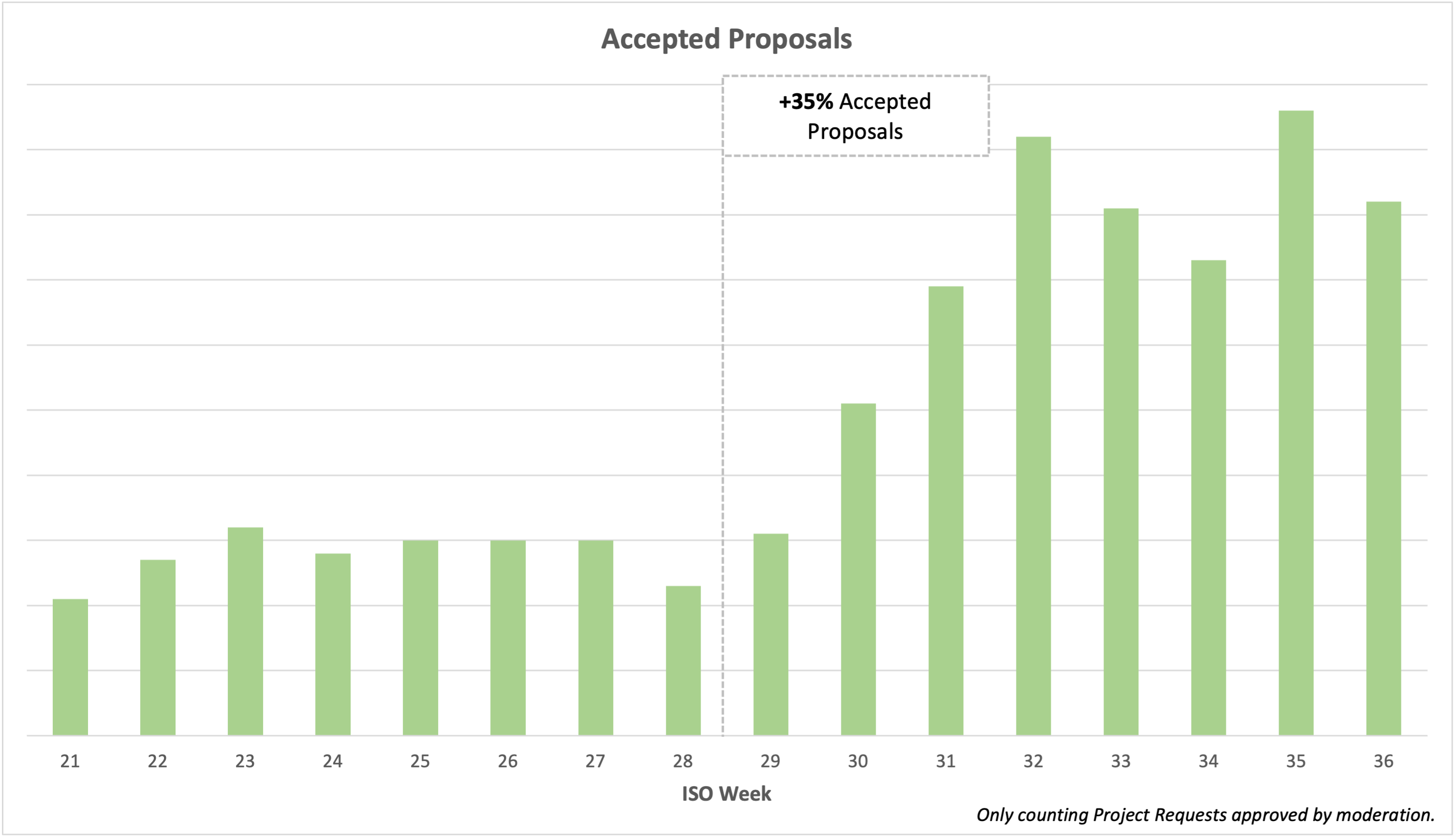
Accepted Proposals are the total number of Project Proposals that have been approved and funded by clients. This graph compares the past eight weeks to the preceding eight-week period.
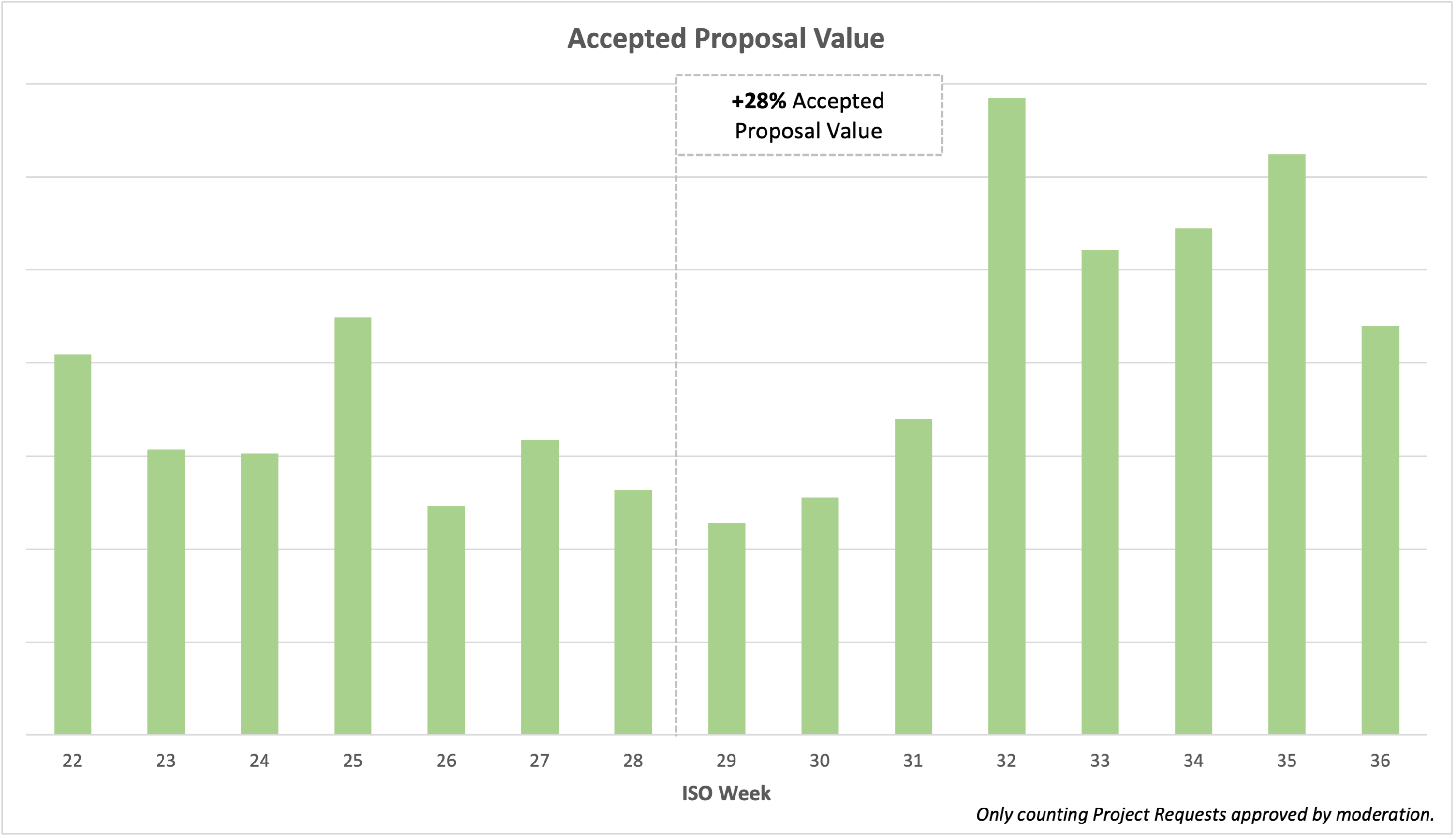
Accepted Proposal Value is the total value of engagements started in a given period, once all milestones are funded. This graph compares the past eight weeks to the preceding eight-week period.
All told, Year 1 exceeded our expectations, and we enter Year 2 with growing momentum.
What’s New
In recent months, we’ve been obsessing over the client experience on Dribbble – we still have a long way to go to achieve the best-in-class experience we intend to deliver, but our latest releases bring us a few steps closer:
- Clients can now tell us what they’re working on and we’ll match them with world-class talent – instantly. For some, the breadth and depth of talent on Dribbble can be daunting to navigate – InstantMatch lets them delegate that task to us. Based on each client’s needs, we’ll select the design and development talent most likely to deliver high-quality work and exceptional customer service.
- After contacting one designer, clients can now forward their Project Request to six additional designers with a single click. The designers recommended by Dribbble are all highly rated, within budget, available now, and relevant to the client’s Project Request. This is the latest iteration of the Recommendations feature, following improvements to both its UX/UI and algorithm.
- Clients can now see designers’ real-time availability when scheduling Video Meetings, minimizing the back-and-forth needed to find a convenient time for both parties. By ensuring that prospective clients schedule calls only during designers’ working hours and never in conflict with their existing meetings, we also avoid missed or poorly timed calls.
These features will increase the number of clients who make contact with designers and the number of designers they contact. To ensure they don’t miss out on these leads, we advise all designers to complete their Work Preferences – including rates, skills, and languages – and set their Meeting Availability.
InstantMatch
Our platform features the profiles, work, and services of nearly one million professional designers. While this is a key competitive advantage for Dribbble, it can make it challenging for clients – especially those new to the platform – to find the designers best suited to their projects.
Previously, to make contact with a designer, a client had to construct an effective search query, review and compare results, and identify suitable designers, then compose a Project Request with enough context for the designer to respond. While this process has become much easier in recent months – and remains a top priority for us – it can still be taxing for the client.
InstantMatch makes it effortless for clients to hire world-class talent – they can skip the search, tell us what they’re working on, and leave it to us to generate their brief and identify the perfect designers.
InstantMatch also addresses another long-overdue need – for the first time, clients can easily find designers who offer both design and development services. Many designers on Dribbble do, but that’s never been made obvious to clients before, which has been inefficient for everyone involved – clients spend time and money hiring and managing multiple service providers who may then need to coordinate with each other, and our designers miss out on lucrative opportunities (and we don’t make money unless they do).
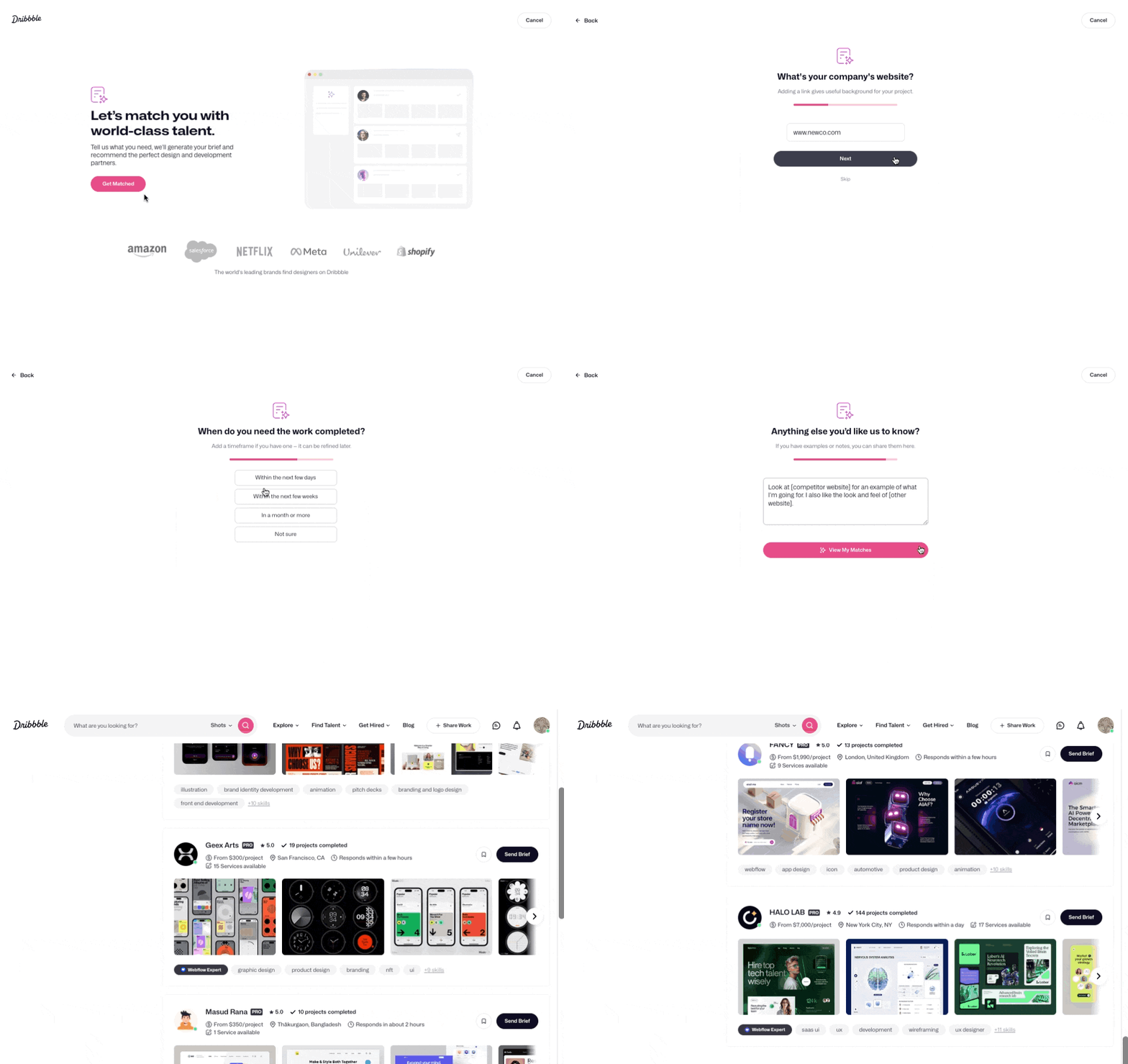
How It Works
- We clarify the client’s needs. Many clients – especially those hiring a designer for the first time – can struggle to articulate their requirements. InstantMatch makes it quick and easy for the client to tell us what they’re working on.
- We generate a descriptive and well-organized Project Brief that will set up a constructive discussion between the client and the designer(s) once they’re matched.
- We match the client with the designers best suited to provide the design and development services needed. The client can then select which of these matches will receive their Project Brief.
- The client hires on Dribbble. As always, Dribbble provides peace of mind with secure payments, fraud protection, full copyright ownership of finished work, and a money-back guarantee if project requirements aren’t met.
To match clients and designers, InstantMatch analyzes the information provided by the client, including the type of business they’re in, their stylistic preferences, and their deadlines and budget, to determine the type of talent needed, then ranks relevant service providers by:
- Their responsiveness to clients (response rate and time to requests).
- The number of clients they’ve worked with on Dribbble and the ratings they received from those clients.
- The types of projects they’ve completed on Dribbble.
- Their lead conversion rate (a weighted metric based on factors such as recency and transaction value).
As with Recommendations, InstantMatch only connects clients with Pro designers. This is to ensure we’re directing clients to designers who not only have relevant skills, but who are also most likely to convert those leads. On every metric related to lead conversion, Pro designers outperform non-Pro designers – for example, their response rate is nearly twice as high, and they respond more than twice as fast. Between Recommendations and InstantMatch, Pro subscribers now have two new lead sources not available to non-subscribers.
Additionally, Designer Advertisers get a ranking bonus. Designer Advertisers are typically agencies with the capacity to take on any amount of work and almost always offer multiple services in addition to design.
For example, the Designer Advertisers below – who are among the most in-demand service providers on Dribbble – offer a range of development capabilities and are perfect for clients who need end-to-end solutions.
Recommendations – August Update
Two weeks ago, we released the most recent version of our Recommendations feature.
Now, when a client sends a Project Request to one designer, we recommend six other designers relevant to that request. This improves the client experience by saving the time and effort of finding and contacting additional designers, and makes it much more likely that the client will receive a response.
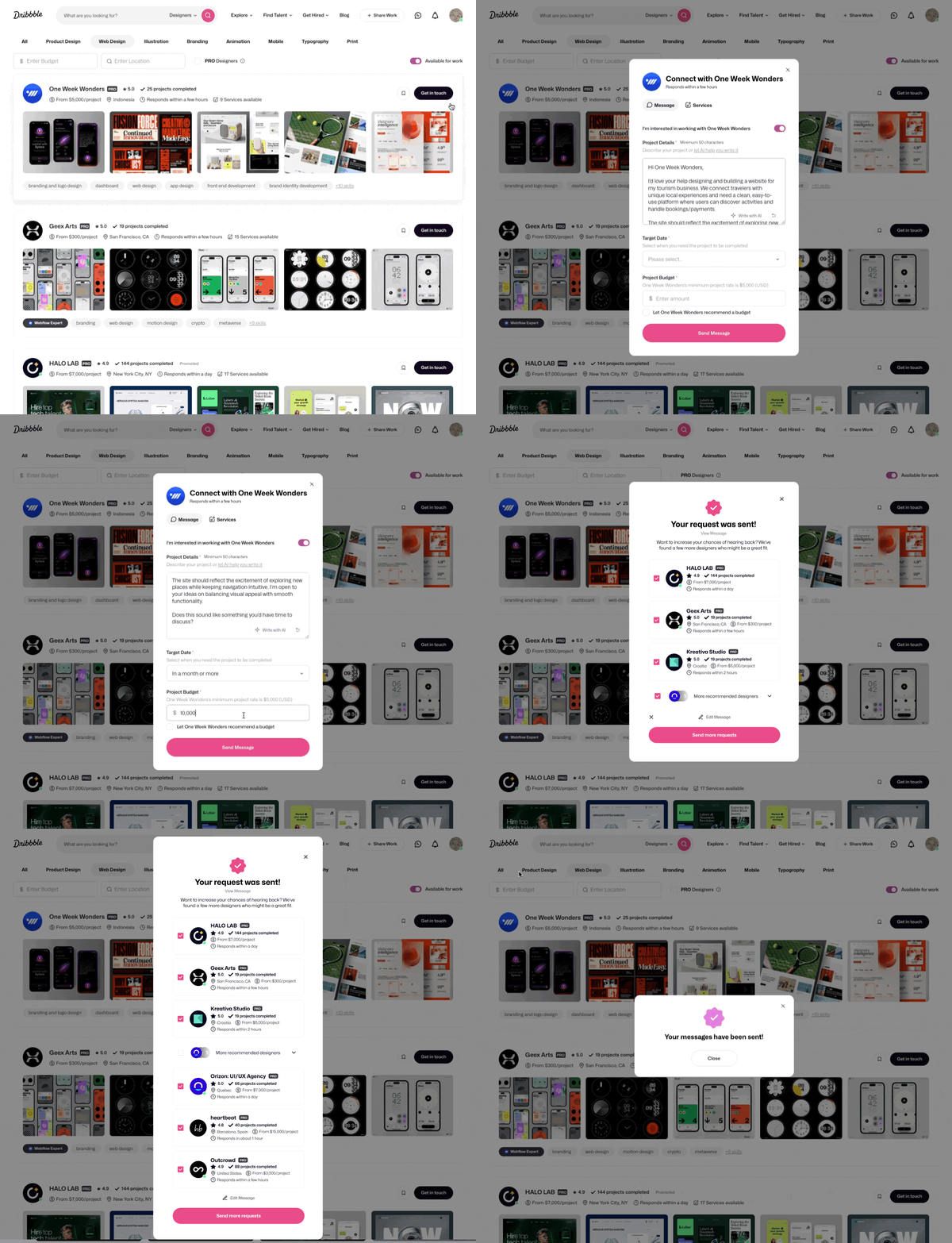
The latest version of the feature improves on the first in several ways :
- The algorithm now returns results that are more relevant.
- The number of recommendations we give has increased from three to six. Over the past eight weeks, we experimented with different counts before determining that six gives clients sufficient options without just recreating a search results page.
- Designer Advertisers – our most highly engaged service providers – are ranked higher in results.
As I shared earlier in this post, Recommendations has contributed significantly to the increase in lead flow to designers over the past two months. Given that only Pro designers are included in the recommendations we make, the impact of the feature is even more pronounced for this group:
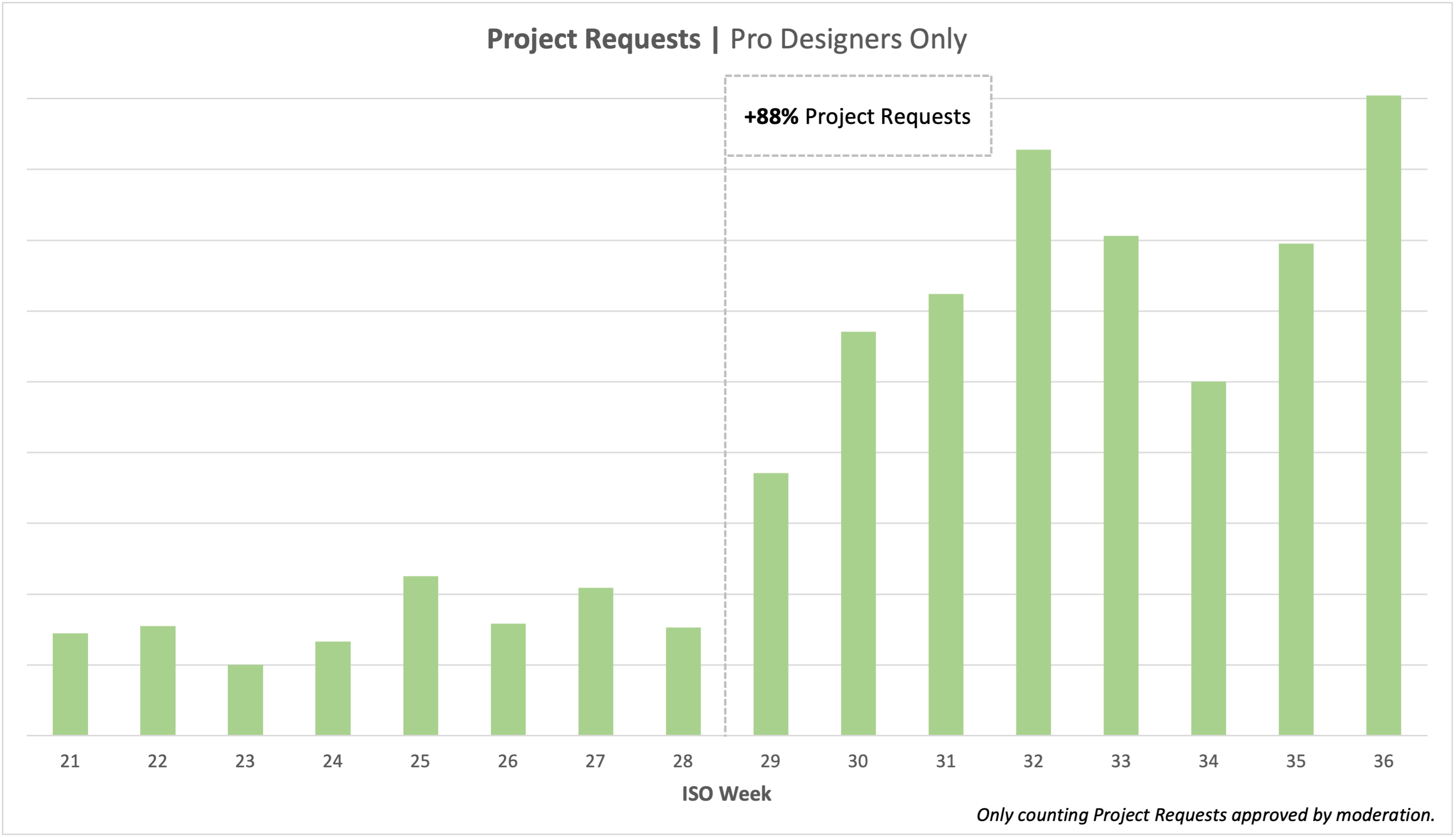
These are work inquiries received by Pro designers only. This graph compares the past eight weeks to the preceding eight-week period.
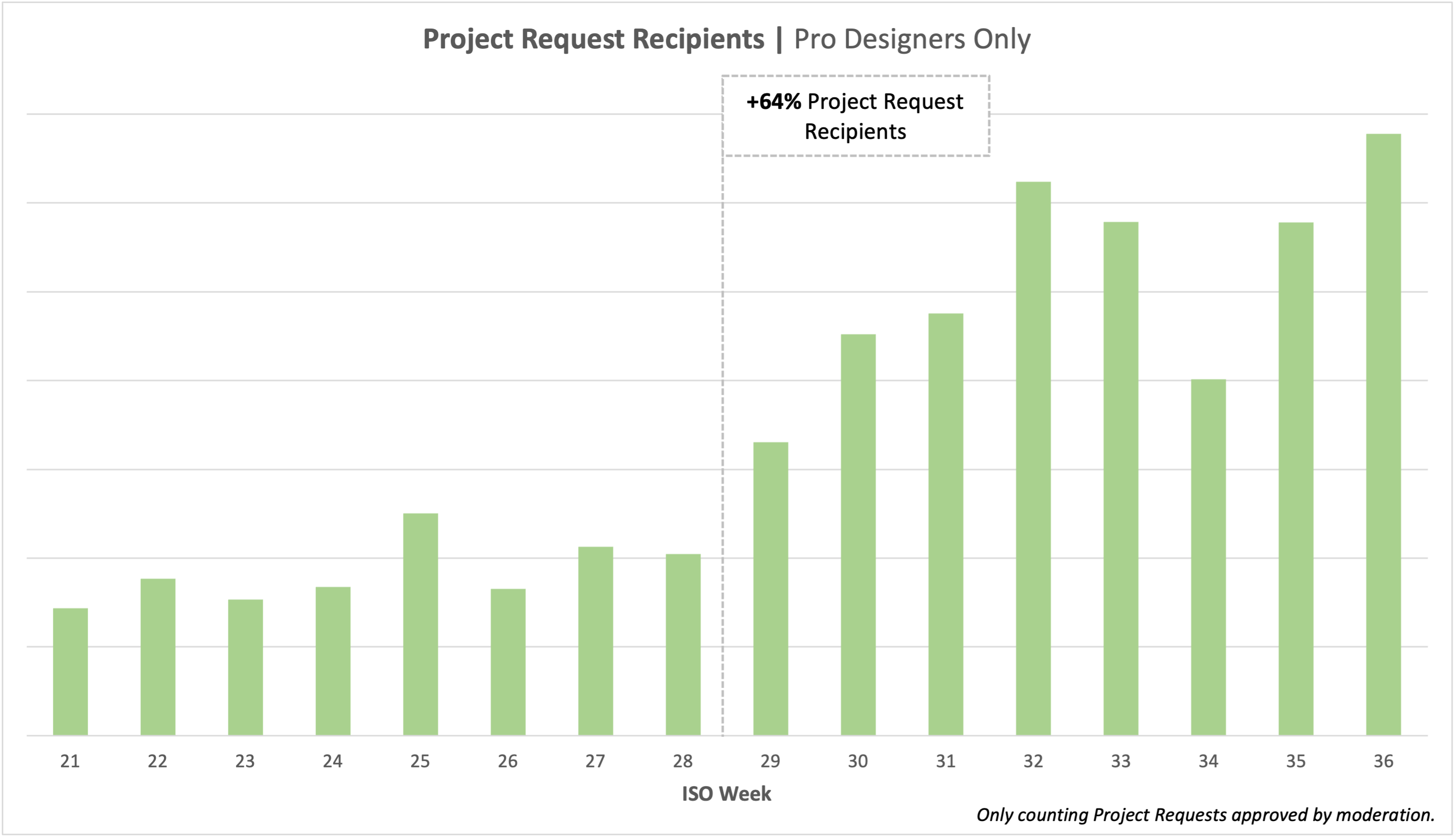
These are the distinct Pro designers that received work inquiries from prospective clients. This graph compares the past eight weeks to the preceding eight-week period.
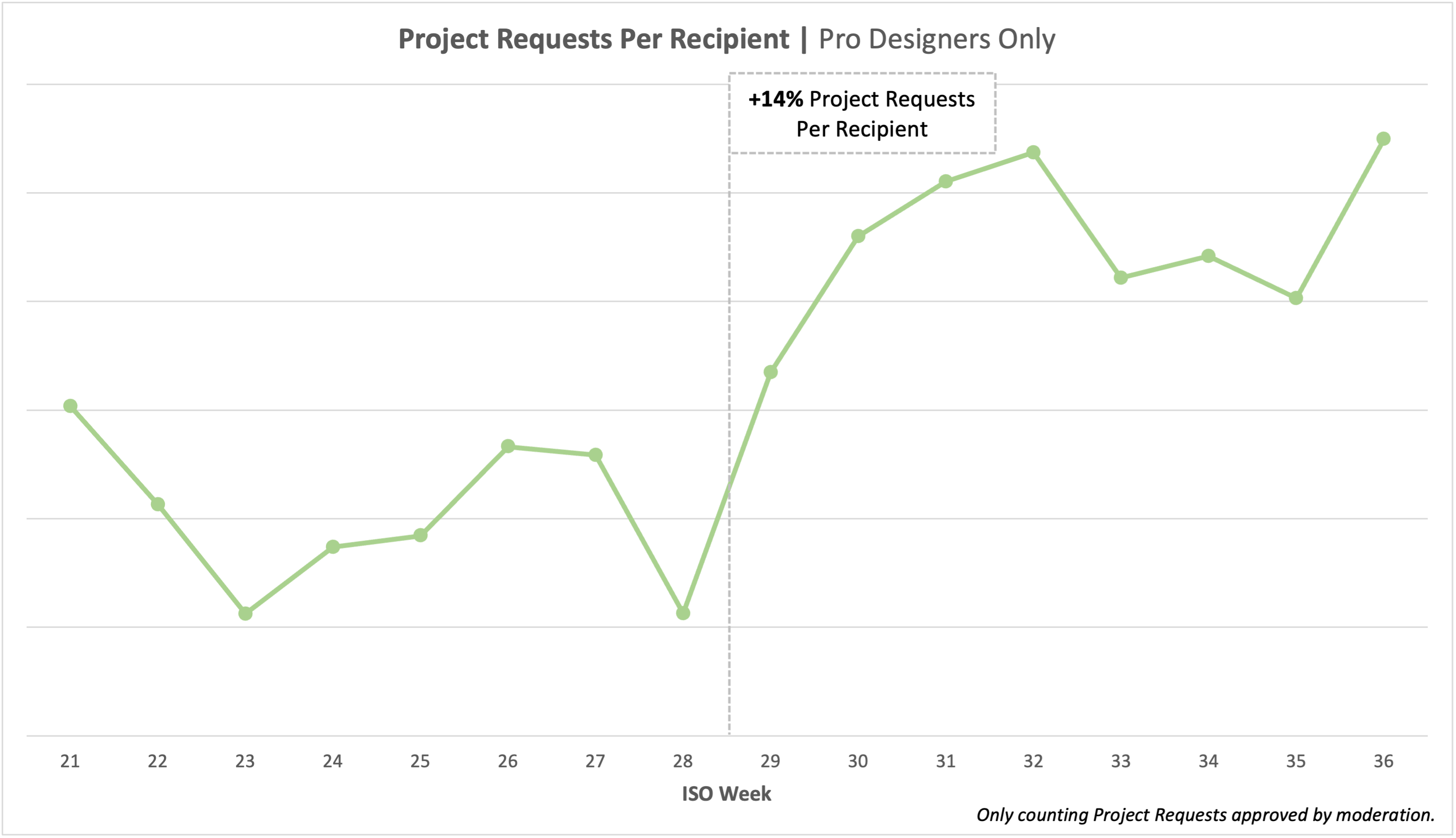
This is the number of work inquiries received by Pro designers that received at least one request. This graph compares the past eight weeks to the preceding eight-week period.
Recommendations has become an important part of Pro’s value proposition because it puts subscribers in front of the clients reaching out to their direct competitors. These clients are also especially high-intent, having taken the time to identify a suitable designer, create an account, and compose a Project Request – which makes Recommendations a highly impactful lead source for subscribers.
Video Meetings – August Update
We introduced Video Meetings in February to make it easier for clients and designers to clarify requirements, set expectations, and share feedback before or after a project has been funded.
As with much of the functionality we introduce on the platform, we started with the basics.
In the first iteration of the feature, meetings couldn’t be scheduled for a future day or time. In the second, we enabled either party to schedule meetings in advance, and clients could schedule a meeting with a designer immediately after sending their Project Request – even before receiving a response. However, calls could still be booked at times when designers were unavailable.
In the latest iteration, designers can now set their real-time meeting availability, making it easier for prospective clients to select a convenient time for both parties without unnecessary back-and-forth.
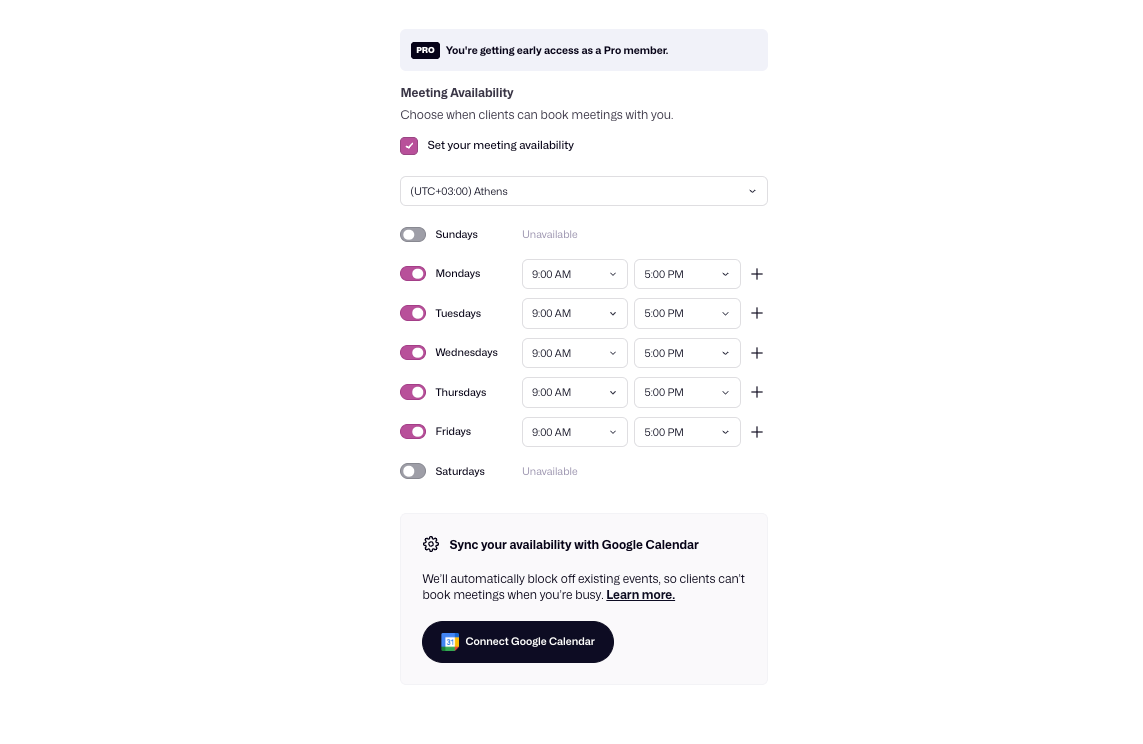
To take full advantage of Video Meetings, we suggest designers:
For more information, designers can visit the Help Center.
Currently, only Pro subscribers can set their real-time meeting availability (though all designers can schedule video calls with clients). While we may open this up to non-subscribers in the future, we’re making a concerted effort to give Pro subscribers an advantage over their competition, both with early access to new features and by limiting new lead sources like Recommendations and InstantMatch to subscribers only.
Since releasing the feature five weeks ago, we’ve observed a double-digit percentage increase in users initiating Video Meetings. That said, it’s difficult to isolate the incremental impact of the new functionality given the overall increase in marketplace activity during this period.
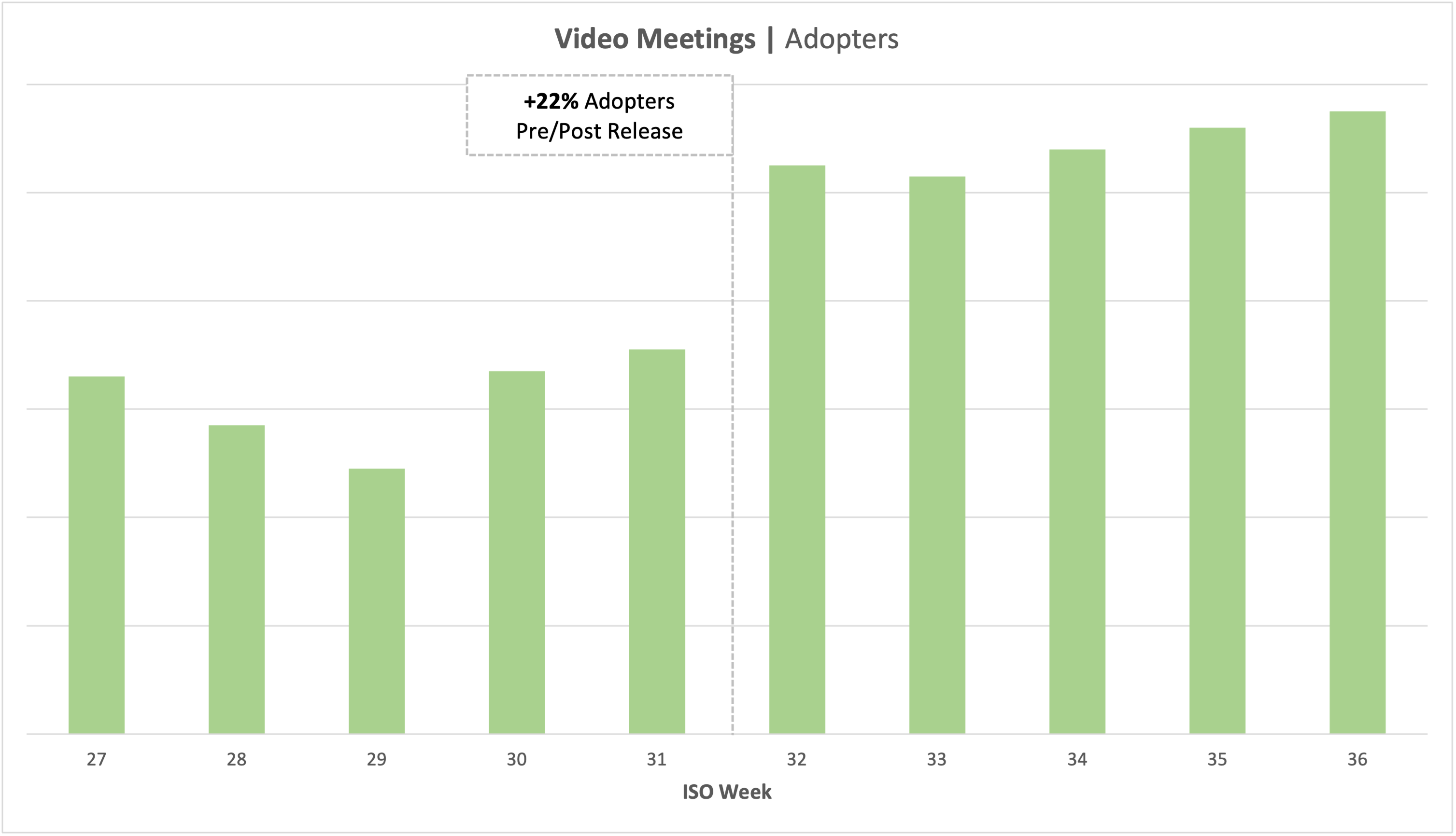
These are the distinct users who initiated Video Meetings. This graph compares the five weeks since we released this feature to the preceding five-week period.
Some reflections on the past year
Dribbble has covered a lot of ground since last September against some long odds.
We decided to reinvent ourselves as a marketplace for services decades after some of our competitors were founded, and among the incumbents are publicly traded companies with billion-dollar market caps, subsidiaries of mega-cap companies, and VC-backed companies with hundreds of millions of dollars on their balance sheets.
Dribbble, by contrast, is a twenty-person company bootstrapping its transformation.
From the outset, we knew we could never match our competitors feature-for-feature or dollar-for-dollar (nor should we try) but we believed that a lean organization with a narrow focus and shared conviction – like ours – could make better decisions and execute faster than the incumbents.
In a matter of months, we spun up a marketplace that is growing in leaps and bounds and helping thousands of designers earn millions of dollars. We adapted the legacy parts of our business that were compatible with our strategy and sunset the rest. With this foundational work behind us, we can now begin expanding into new markets, staking out new areas of growth, and realizing our vision for Dribbble.
However, while we’re executing on Dribbble’s mission more tangibly than ever before – and providing our users with a high degree of transparency around our decision-making and its results – our marketplace strategy has provoked very negative reactions on social media, as well as resistance from some longtime users.
I’ll admit, this pushback initially came as a surprise to me, since I expected designers to support our adoption of a business model that can only work if designers themselves are successful.
While some criticism has come from designers nostalgic for the invite-only community of the early 2010s, most of the negativity has actually come from designers who rely on Dribbble as a lead source – in other words, the very group we’re now serving more intentionally.
Some object to sharing revenue from the clients they meet on Dribbble, some are frustrated by having to adjust their workflow to transact on-platform, and some argue that online marketplaces commoditize design work or diminish designers’ reputations in some way.
Our enforcement of Dribbble’s Terms of Service – specifically, the policy on disintermediation that we announced in March – has been especially controversial with these designers. In fact, we recently had a situation where the suspension of an influential designer landed us in TechCrunch with a negative-ish article. However, if a user – even a longtime user – isn’t able or isn’t willing to adapt to our new business model, and circumvents or attempts to circumvent our Platform Fees, they jeopardize both the future of the platform and the livelihood of the many designers who rely on Dribbble, regardless of their past contributions.
While the social media discourse has had no discernible negative impact on our business – and perhaps has done more to publicize our new offerings than any marketing we could have done ourselves – I empathize with those who are frustrated or taken aback by the rapidity of the changes and, in retrospect, I should have anticipated some of these sentiments.
To be clear, we’re committed to this strategy for the long haul – Dribbble is now in the lead generation business, and we’re just getting started. In the coming months, we’ll continue optimizing every stage of the conversion funnel to bring more clients to designers, while improving our Pro and Designer Advertising offerings for those designers seeking to generate and convert more leads. More to come soon!